Wednesday, September 24, 2008

Two Planets Suffer Violent Collision

Two Planets Suffer Violent Collision

ScienceDaily (Sep. 24, 2008) — Two terrestrial planets orbiting a mature sun-like star some 300 light-years from Earth recently suffered a violent collision, astronomers at UCLA, Tennessee State University and the California Institute of Technology will report in a December issue of the Astrophysical Journal।

"It's as if Earth and Venus collided with each other," said Benjamin Zuckerman, UCLA professor of physics and astronomy and a co-author on the paper. "Astronomers have never seen anything like this before. Apparently, major catastrophic collisions can take place in a fully mature planetary system."

"If any life was present on either planet, the massive collision would have wiped out everything in a matter of minutes — the ultimate extinction event," said co-author Gregory Henry, an astronomer at Tennessee State University (TSU). "A massive disk of infrared-emitting dust circling the star provides silent testimony to this sad fate."

Zuckerman, Henry and Michael Muno, an astronomer at Caltech at the time of the research, were studying a star known as BD+20 307, which is surrounded by a shocking 1 million times more dust than is orbiting our sun. The star is located in the constellation Aries. The astronomers gathered X-ray data using the orbiting Chandra X-ray Observatory and brightness data from one of TSU's automated telescopes in southern Arizona, hoping to measure the age of the star.

"We expected to find that BD+20 307 was relatively young, a few hundred million years old at most, with the massive dust ring signaling the final stages in the formation of the star's planetary system," Muno said.

Those expectations were shown to be premature, however, when Carnegie Institution of Washington astronomer Alycia Weinberger announced in the May 20, 2008, issue of the Astrophysical Journal that BD+20 307 is actually a close binary star — two stars orbiting around their common center of mass.

"That discovery radically revised the interpretation of the data and transformed the star into a unique and intriguing system," said TSU astronomer Francis Fekel who, along with TSU's Michael Williamson, was asked to provide additional spectroscopic data from another TSU automated telescope in Arizona to assist in comprehending this exceptional binary system.

The new spectroscopic data confirmed that BD+20 307 is composed of two stars, both very similar in mass, temperature and size to our own sun. They orbit about their common center of mass every 3.42 days.

"The patterns of element abundances in the stars show that they are much older than a few hundred million years, as originally thought," Fekel said. "Instead, the binary system appears to have an age of several billion years, comparable to our solar system."

"The planetary collision in BD+20 307 was not observed directly but rather was inferred from the extraordinary quantity of dust particles that orbit the binary pair at about the same distance as Earth and Venus are from our sun," Henry said. "If this dust does indeed point to the presence of terrestrial planets, then this represents the first known example of planets of any mass in orbit around a close binary star."

Zuckerman and colleagues first reported in the journal Nature in July 2005 that BD+20 307, then still thought to be a single star, was surrounded by more warm orbiting dust than any other sun-like star known to astronomers. The dust is orbiting the binary system very closely, where Earth-like planets are most likely to be and where dust typically cannot survive long. Small dust particles get pushed away by stellar radiation, while larger pieces get reduced to dust in collisions within the disk and are then whisked away. Thus, the dust-forming collision near BD+20 307 must have taken place rather recently, probably within the past few hundred thousand years and perhaps much more recently, the astronomers said.

"This poses two very interesting questions," Fekel said. "How do planetary orbits become destabilized in such an old, mature system, and could such a collision happen in our own solar system?"

"The stability of planetary orbits in our own solar system has been considered for nearly two decades by astronomer Jacques Laskar in France and, more recently, by Konstantin Batygin and Greg Laughlin in the U.S.A.," Henry noted. "Their computer models predict planetary motions into the distant future and they find a small probability for collisions of Mercury with Earth or Venus sometime in the next billion years or more. The small probability of this happening may be related to the rarity of very dusty planetary systems like BD+20 307."

"There is no question, however," Zuckerman said, "that major collisions have occurred in our solar system's past. Many astronomers believe our moon was formed from the grazing collision of two planetary embryos — the young Earth and a body about the size of Mars — a crash that created tremendous debris, some of which condensed to form the moon and some of which went into orbit around the young sun. By contrast with the massive crash in the BD+20 307 system, the collision of an asteroid with Earth 65 million years ago, the most favored explanation for the final demise of the dinosaurs, was a mere pipsqueak."

In their 1932 novel "When Worlds Collide," science fiction writers Philip Wylie and Edwin Balmer envisioned the destruction of Earth by a collision with a planet of a passing star. The 1951 classic movie based on the novel began a long line of adventure stories of space rocks apocalyptically plowing into Earth.

"But," Zuckerman noted, "there is no evidence near BD+20 307 of any such passing star."

This research is federally funded by the National Science Foundation and NASA and also by Tennessee State University and the state of Tennessee, through its Centers of Excellence program.

Thursday, August 21, 2008

Speed

Traveling Faster Than the Speed of Light: Two Baylor Physicists Have a New Idea That Could Make It Happen

Aug. 11, 2008

by Matt Pene

Two Baylor University scientists have come up with a new method to cause a spaceship to effectively travel faster than the speed of light, without breaking the laws of physics.

Dr. Gerald Cleaver, associate professor of physics at Baylor, and Richard Obousy, a Baylor graduate student, theorize that by manipulating the extra spatial dimensions of string theory around a spaceship with an extremely large amount of energy, it would create a "bubble" that could cause the ship to travel faster than the speed of light. To create this bubble, the Baylor physicists believe manipulating the 10th spatial dimension would alter the dark energy in three large spatial dimensions: height, width and length. Cleaver said positive dark energy is currently responsible for speeding up the expansion rate of our universe as time moves on, just like it did after the Big Bang, when the universe expanded much faster than the speed of light for a very brief time.

"Think of it like a surfer riding a wave," said Cleaver, who co-authored the paper with Obousy about the new method. "The ship would be pushed by the spatial bubble and the bubble would be traveling faster than the speed of light."

The method is based on the Alcubierre drive, which proposes expanding the fabric of space behind a ship and shrinking space-time in front of the ship. The ship would not actually move, rather the ship would sit in a bubble between the expanding and shrinking space-time dimensions. Since space would move around the ship, the theory does not violate Einstein's Theory of Relativity, which states that it would take an infinite amount of energy to accelerate a massive object to the speed of light.

String theory suggests the universe is made up of multiple dimensions. Height, width and length are three dimensions, and time is the fourth dimension. String theorists use to believe that there were a total of 10 dimensions, with six other dimensions that we can not yet identify because of their incredibly small size. A new theory, called M-theory, takes string theory one step farther and states that the "strings" that all things are made of actually vibrate in an additional spatial dimensional, which is called the 10th dimension. It is by changing the size of this 10th spatial dimension that Baylor researchers believe could alter the strength of the dark energy in such a manner to propel a ship faster than the speed of light.

The Baylor physicists estimate that the amount of energy needed to influence the extra dimension is equivalent to the entire mass of Jupiter being converted into pure energy for a ship measuring roughly 10 meters by 10 meters by 10 meters.

"That is an enormous amount of energy," Cleaver said. "We are still a very long ways off before we could create something to harness that type of energy."

The paper appears in the Journal of the British Interplanetary Society.

The full paper can be viewed here.

For more information, contact Dr. Cleaver at (254) 710-2283.

Black holes

Black holes 'dodge middle ground'

For black holes, there appears to be very little room for mediocrity, astronomers have found.

A study suggests they come in either small or large sizes, but medium-sized ones are very rare or non-existent.

A team of astronomers has examined one of the best hiding places for a middleweight black hole, and found that it cannot possibly host one.

Details of the research are to be published in the latest issue of the Astrophysical Journal.


If a medium black hole existed in a cluster, it would either swallow little black holes or kick them out of the cluster
Daniel Stern, JPL
Black holes are incredibly dense points of matter, whose gravity prevents even light from escaping.

The least massive black holes known are about 10 times the mass of our Sun and form when colossal stars explode as supernovas.

The heftiest black holes are billions of times the mass of the Sun and lie deep in the bellies of almost all galaxies.

That leaves black holes of intermediate mass, which were thought to be buried at the cores of globular clusters.

Full of stars

Globular clusters are dense collections of millions of stars, which reside within galaxies containing hundreds of billions of stars.

Theorists argue that these clusters should have a scaled-down version of a galactic black hole. Such objects would be about 1,000 to 10,000 times the mass of the Sun - medium-sized as far as black holes are concerned.

Now, a team of astronomers led by Stephen Zepf of Michigan State University, East Lansing, has carried out a detailed examination of a globular cluster called RZ2109.

The researchers' work led them to the conclusion that it could not possess a medium-sized black hole.

"Some theories say that small black holes in globular clusters should sink down to the centre and form a medium-sized one, but our discovery suggests this isn't true," said co-author Daniel Stern of Nasa's Jet Propulsion Laboratory in Pasadena, California.

In a previous study, Dr Zepf and his colleagues looked for evidence of a black hole in RZ2109, located 50 million light-years away in a nearby galaxy.

Elusive quarry

Using the European Space Agency's (Esa) XMM-Newton telescope, they discovered the telltale X-ray signature of an active, or "feeding", black hole. But, at that point, they still didn't know its size.

Stephen Zepf and Daniel Stern then teamed up with other researchers to obtain a chemical fingerprint, called a spectrum, of the globular cluster, using the WM Keck Observatory on Mauna Kea in Hawaii.

The spectrum revealed that the black hole is petite, with roughly 10 times the mass of the Sun.

According to theory, a cluster with a small black hole cannot have a medium one, too.

"If a medium black hole existed in a cluster, it would either swallow little black holes or kick them out of the cluster," said Dr Stern. In other words, the small black hole in RZ2109 rules out the possibility of a medium one being there, too.

The study does not quite represent the end of the road for medium-sized black holes.

Zepf said it was possible such objects were hiding in the outskirts of galaxies like our Milky Way, either in surrounding "dwarf galaxies" or in the remnants of dwarf galaxies being swallowed by a bigger one.

If so, he said, the black holes would be faint and difficult to find.

Story from BBC NEWS:
http://news.bbc.co.uk/go/pr/fr/-/1/hi/sci/tech/7573364.stm

Published: 2008/08/20 22:30:54 GMT

Thursday, February 28, 2008

Quakes Under Pacific Ocean Floor Reveal Unexpected Circulation System

Research upsets long-held view of volcanism-driven hydrothermal vents

Scientists have discovered a new way in which ocean water circulates through deep-sea vents. Credit and Larger Version
January 11, 2008
Zigzagging some 60,000 kilometers across the ocean floor, Earth's system of mid-ocean ridges plays a pivotal role in many workings of the planet: plate-tectonic movements, heat flow from the interior, and the chemistry of rock, water and air।

Now, a team of seismologists working in 2,500 meters of water on the East Pacific Rise, some 565 miles southwest of Acapulco, Mexico, has made the first images of one of these systems--and it doesn't look the way most scientists had assumed. The results of the National Science Foundation (NSF)-supported research appear in this week's issue of the journal Nature.
It was not until the late 1970s that scientists discovered the existence of vast plumbing systems under the oceans called hydrothermal vents. The systems pull in cold water, superheat it, then spit it back out from seafloor vents--a process that brings up not only hot water, but dissolved substances from rocks below. Unique life-forms feed off the vents' stew, and valuable minerals, including gold, may pile up.
The hypothetical image of a hydrothermal-vent system shows water forced down by overlying pressure through large faults along ridge flanks. The water is heated by shallow volcanism, then rises toward the ridges' middles, where vents (often called "black smokers" for the cloud of chemicals they exude) tend to cluster.
"The new images show a very different arrangement," said Rodey Batiza, marine geosciences section head in NSF's Division of Ocean Sciences.
The research team's calculations suggest that water moves a lot faster than previously thought--perhaps a billion gallons per year--through these systems. The water appears to descend instead through a buried 200-meter-wide chimney atop the ridge studied on the East Pacific Rise, run below the ridge along its axis through a tunnel just above a magma chamber, then bubble back up through a series of vents further along the ridge.
"If you look at images of hydrothermal vents, you come up with cartoons that don't at all match what we see," said lead Nature paper author Maya Tolstoy, a marine geologist at Lamont-Doherty Earth Observatory in Palisades, N.Y.
The images were created using seismometers planted around the ridge to record tiny, shallow earthquakes--in this study, 7,000 of them over seven months in 2003 and 2004.
The shallow quakes cluster neatly, outlining the cold water's apparent entrance. It dives straight down about 700 meters, then fans out into a horizontal band about 200 meters wide, before bottoming out at about 1.5 kilometers just above the magma. Heated water rises back up through a dozen vents about 2 kilometers north along the ridge.
The researchers interpret the quakes as being the result of cold water passing through hot rocks and picking up their heat--a process that shrinks the rocks and cracks them, creating small quakes.
Seawater, forced down into the resulting space, eventually gets heated by the magma, then rises back to the seafloor--much the same process seen in a pot of boiling water. Tolstoy and co-authors believe the water travels not through large faults--the model previously favored by some scientists--but through systems of tiny cracks.
Their chart of the water's route is reinforced by biologists' observations from submersible dives that the area around the downflow chimney is more or less lifeless, while the surging vents are covered with bacterial mats, mussels, tubeworms and other creatures that thrive off the heat and chemicals.
It is a mystery where vent organisms originally came from--some evolutionary biologists believe that life on Earth began with them--and how they make their way from one isolated vent system to another.
These findings could add to an understanding of seafloor currents along which they may move, and of the nutrient flows that feed them, said Tolstoy. The work also has large-scale implications for how heat and chemicals are cycled to the seafloor and overlying waters, she said.
Scientists are still retrieving and analyzing data on the vents and their circulation. In 2006, an ocean-bottom volcanic eruption buried many of their instruments; most of the instruments were lost, but the "survivors" provided new information about how undersea eruptions work.
-- Cheryl Dybas, NSF (703) 292-7734 cdybas@nsf.gov
Kevin Krajick, LDEO (212) 854-9729 kkrajick@ei.columbia.edu

Wednesday, November 28, 2007

'Ultrasound' Of Earth's Crust Reveals Inner Workings Of A Tsunami

ScienceDaily (Nov। 27, 2007) — Research just announced by a team of U.S. and Japanese geoscientists may help explain why part of the seafloor near the southwest coast of Japan is particularly good at generating devastating tsunamis, such as the 1944 Tonankai event, which killed at least 1,200 people. The findings will help scientists assess the risk of giant tsunamis in other regions of the world.

Geoscientists from The University of Texas at Austin and colleagues used a commercial ship to collect three-dimensional seismic data that reveals the structure of Earth's crust below a region of the Pacific seafloor known as the Nankai Trough. The resulting images are akin to ultrasounds of the human body.
The results, published in the journal Science, address a long standing mystery as to why earthquakes below some parts of the seafloor trigger large tsunamis while earthquakes in other regions do not।

The 3D seismic images allowed the researchers to reconstruct how layers of rock and sediment have cracked and shifted over time. They found two things that contribute to big tsunamis. First, they confirmed the existence of a major fault that runs from a region known to unleash earthquakes about 10 kilometers (6 miles) deep right up to the seafloor. When an earthquake happens, the fault allows it to reach up and move the seafloor up or down, carrying a column of water with it and setting up a series of tsunami waves that spread outward.
Second, and most surprising, the team discovered that the recent fault activity, probably including the slip that caused the 1944 event, has shifted to landward branches of the fault, becoming shallower and steeper than it was in the past.

"That leads to more direct displacement of the seafloor and a larger vertical component of seafloor displacement that is more effective in generating tsunamis," said Nathan Bangs, senior research scientist at the Institute for Geophysics at The University of Texas at Austin who was co-principal investigator on the research project and co-author on the Science article।
The Nankai Trough is in a subduction zone, an area where two tectonic plates are colliding, pushing one plate down below the other। The grinding of one plate over the other in subduction zones leads to some of the world's largest earthquakes.


In 2002, a team of researchers led by Jin-Oh Park at Japan Marine Science and Technology Center (JAMSTEC) had identified the fault, known as a megathrust or megasplay fault, using less detailed two-dimensional geophysical methods. Based on its location, they suggested a possible link to the 1944 event, but they were unable to determine where faulting has been recently active.
"What we can now say is that slip has very recently propagated up to or near to the seafloor, and slip along these thrusts most likely caused the large tsunami during the 1944 Tonankai 8।1 magnitude event," said Bangs।

The images produced in this project will be used by scientists in the Nankai Trough Seismogenic Zone Experiment (NanTroSEIZE), an international effort designed to, for the first time, "drill, sample and instrument the earthquake-causing, or seismogenic portion of Earth's crust, where violent, large-scale earthquakes have occurred repeatedly throughout history."
"The ultimate goal is to understand what's happening at different margins," said Bangs. "The 2004 Indonesian tsunami was a big surprise. It's still not clear why that earthquake created such a large tsunami. By understanding places like Nankai, we'll have more information and a better approach to looking at other places to determine whether they have potential. And we'll be less surprised in the future."
Bangs' co-principal investigator was Gregory Moore at JAMSTEC in Yokohama and the University of Hawaii, Honolulu। The other co-authors are Emily Pangborn at the Institute for Geophysics at The University of Texas at Austin, Asahiko Taira and Shin'ichi Kuramoto at JAMSTEC and Harold Tobin at the University of Wisconsin, Madison. Funding for the project was provided by the National Science Foundation, Ocean Drilling Program and Japanese Ministry of Education, Culture, Sports and Technology.

Adapted from materials provided by University of Texas at Austin

Thursday, April 19, 2007

385-million-year-old fossil reveals first tree

By William Atkins
Thursday, 19 April 2007
British scientists have discovered a 385 myo fossil that contains a fern-like frond that shows the tree was about eight meters (26 feet) tall. It is the oldest known tree based on fossil records


The fossilized frond, which is similar to today’s fern, came from the Gilboa Forest in the Catskill Mountain in New York State. The Gilboa Forest contains the oldest tree fossils ever discovered on the Earth.

Three hundred seventy million-year-old rocks and fossils from tree stumps were first exposed after an 1869 flood occurred in the forest that washed away much of the top layer of soil. Later, in the 1920s, other stump fossils were found when the Gilboa Reservoir was being built.

The Gilboa forest is well known to paleontologists (scientists that study prehistoric life forms with the use of plant and animal fossils) who have been studying the area for years. Unfortunately, all they could find were fossilized stumps of trees. They couldn’t find any leaves—that is, until now.

British team members—headed by Chris Berry of Cardiff University, England—state that the tree is one of an extinct group of plants known as cladoxylopsids, which are closely related to some ferns and articulates (sphenopsids) that still live today. The cladoxylopsids have a central trunk with smaller, lateral branches coming off.

All fossils of cladoxylopsids are from the Middle Devonian (417 to 354 million years ago) to Early Carboniferous (354 to 290 million years ago) periods.

Thursday, March 08, 2007

Species under threat: Honey, who shrunk the bee population?

Across America, millions of honey bees are abandoning their hives and flying off to die, leaving beekeepers facing ruin and US agriculture under threat. And to date, no one knows why. Michael McCarthy reports

Published: 01 March 2007

It has echoes of a murder mystery in polite society. There could hardly be a more sedate and unruffled world than beekeeping, but the beekeepers of the United States have suddenly encountered affliction, calamity and death on a massive scale. And they have not got a clue why it is happening.

Across the country, from the Atlantic coast to the Pacific, honey bee colonies have started to die off, abruptly and decisively. Millions of bees are abandoning their hives and flying off to die (they cannot survive as a colony without the queen, who is always left behind).

Some beekeepers, especially those with big portable apiaries, or bee farms, which are used for large-scale pollination of fruit and vegetable crops, are facing commercial ruin - and there is a growing threat that America's agriculture may be struck a mortal blow by the loss of the pollinators. Yet scientists investigating the problem have no idea what is causing it.

The phenomenon is recent, dating back to autumn, when beekeepers along the east coast of the US started to notice the die-offs. It was given the name of fall dwindle disease, but now it has been renamed to reflect better its dramatic nature, and is known as colony collapse disorder.

It is swift in its effect. Over the course of a week the majority of the bees in an affected colony will flee the hive and disappear, going off to die elsewhere. The few remaining insects are then found to be enormously diseased - they have a "tremendous pathogen load", the scientists say. But why? No one yet knows.

The condition has been recorded in at least 24 states. It is having a major effect on the mobile apiaries which are transported across the US to pollinate large-scale crops, such as oranges in Florida or almonds in California. Some have lost up to 90 per cent of their bees.

A reliable estimate of the true extent of the problem will not be possible for another month or so, until winter comes to an end and the hibernating bee colonies in the northern American states wake up. But scientists are very worried, not least because, as there is no obvious cause for the disease as yet, there is no way of tackling it.

"We are extremely alarmed," said Diana Cox-Foster, the professor of Entomology at Penn States University and one of the leading members of a specially convened colony-collapse disorder working group.

"It is one of the most alarming insect diseases ever to hit the US and it has the potential to devastate the US beekeeping industry. In some ways it may be to the insect world what foot-and-mouth disease was to livestock in England."

Most of the pollination for more than 90 commercial crops grown throughout the United States is provided byApis mellifera, the honey bee, and the value from the pollination to agricultural output in the country is estimated at $14.6bn (£8bn) annually. Growers rent about 1.5 million colonies each year to pollinate crops - a colony usually being the group of bees in a hive.

California's almond crop, which is the biggest in the world, stretching over more than half a million acres over the state's central valley, now draws more than half of the mobile bee colonies in America at pollinating time - which is now. Some big commercial beekeeping operations which have been hit hard by the current disease have had to import millions of bees from Australia to enable the almond trees to be pollinated.

Some of these mobile apiaries have been losing 60 or 70 per cent of their insects, or even more. "A honey producer in Pennsylvania doing local pollination, Larry Curtis, has gone from 1,000 bee colonies to fewer than eight," said Professor Cox-Foster. The disease showed a completely new set of symptoms, "which does not seem to match anything in the literature", said the entomologist.

One was that the bees left the hive and flew away to die elsewhere, over about a week. Another was that the few bees left inside the hive were carrying "a tremendous number of pathogens" - virtually every known bee virus could be detected in the insects, she said, and some bees were carrying five or six viruses at a time, as well as fungal infections. Because of this it was assumed that the bees' immune systems were being suppressed in some way.

Professor Cox-Foster went on: "And another unusual symptom that we're are seeing, which makes this very different, is that normally when a bee colony gets weak and its numbers are decreasing, other neighbouring bees will come and steal the resources - they will take away the honey and the pollen.

"Other insects like to take advantage too, such as the wax moth or the hive beetle. But none of this is happening. These insects are not coming in.

"This suggests that there is something toxic in the colony itself which is repelling them."

The scientists involved in the working group were surveying the dead colonies but did not think the cause of the deaths was anything brought in by beekeepers, such as pesticides, she said.

Another of the researchers studying the collapses, Dennis van Engelsdorp, a bee specialist with the State of Pennsylvania, said it was still difficult to gauge their full extent. It was possible that the bees were fleeing the colonies because they sensed they themselves were diseased or affected in some way, he said. This behaviour has been recorded in other social insects, such as ants.

The introduction of the parasitic bee mite Varroa in 1987 and the invasion of the Africanised honey bee in 1990 have threatened honey bee colonies in the US and in other parts of the world, but although serious, they were easily comprehensible; colony collapse disorder is a deep mystery.

One theory is that the bees may be suffering from stress as beekeepers increasingly transport them around the country, the hives stacked on top of each other on the backs of trucks, to carry out pollination contracts in orchard after orchard, in different states.

Tens of billions of bees are now involved in this "migratory" pollination. An operator might go from pollinating oranges in Florida, to apples in Pennsylvania, to blueberries in Maine, then back to Massachusetts to pollinate cranberries.

The business is so big that pollination is replacing honey-making as the main money earner at the top end of the beekeeping market, not least because in recent years the US has been flooded with cheap honey imports, mainly from Argentina and China.

A typical bee colony, which might be anything from 15,000 to 30,000 bees, would be rented out to a fruit grower for about $135 - a price that is up from $55 only three years ago. To keep the bees' energy up while they are pollinating, beekeepers feed them protein supplements and syrup carried around in large tanks.

It is in these migratory colonies where the biggest losses have been seen. But the stress theory is as much speculation as anything else. At the moment, the disappearance of America's bees is as big a mystery as the disappearance of London's sparrows.

Fish contaminated with mercury 'pose worldwide threat to health'

By Jeremy Laurance, Health Editor
Published: 08 March 2007


A worldwide warning about the risks of eating mercury-contaminated fish is to be issued by an international group of scientists today.

Three times more mercury is falling from the sky than before the Industrial Revolution 200 years ago, the scientists say.

Fish absorb the toxic chemical, which pollutes the seas, posing a risk especially to children and women of childbearing age. The role of low-level pollutants such as lead and mercury on the growing brain has been known for decades and measures have been taken to reduce exposure to a minimum. But the scientists say more must be done.

The warning is based on five papers by mercury specialists summarising the current state of knowledge on the chemical published in the international science journal Ambio. Called the Madison Declaration on Mercury Pollution, it presents 33 key findings from four expert panels over the past year. Every member of the four panels backed the declaration which was endorsed by more than 1,000 scientists at an international conference on mercury pollution in Madison, Wisconsin, in the US last August.

However, it runs counter to research by British scientists last month which found pregnant women who ate the most fish had children who were more advanced, with higher IQs and better physical abilities.

The British researchers said that while mercury is known to harm brain development, fish also contain omega-3 fatty acids and other nutrients which are essential to brain development. They studied 9,000 families taking part in the Children of the 90s project at the University of Bristol and concluded, in The Lancet, that the risks of eating fish were outweighed by the benefits.

The US scientists focused on the risks of mercury which they say now constitute a "public health problem in most regions of the world". In addition to its toxic effects on the human foetus, new evidence indicates it may increase the risk of heart disease, particularly in adult men.

While developed countries have reduced mercury emissions over the past 30 years, these have been offset by increased emissions from developing nations.

The uncontrolled use of the metal in small-scale gold mining is contaminating thousands of sites around the world, putting 50 million inhabitants of mining regions at risk and contributing 10 per cent of the global burden of the pollutant attributable to human activities in the atmosphere.

The global spread of the threat is revealed in increased mercury concentrations now being detected in fish-eating species in remote areas of the planet. The impact on marine eco-systems may lead to population declines in these species and in fish stocks.

Professor James Wiener, of the University of Wisconsin, said: "The policy implications of these findings are clear. Effective national and international policies are needed to combat this global problem."

In the US, official government advice is for pregnant women to limit their consumption of all seafood, including white fish, oily fish and shellfish, to no more than 12oz (340g) a week in order to limit their exposure to mercury.

In the UK, the Food Standards Agency advises expectant mothers to avoid shark, swordfish and marlin and to limit their consumption of tuna, because these are the fish with the highest levels of mercury.

The key findings

* Three times more mercury is falling from the sky today than before the Industrial Revolution

* Eating fish is the primary way most people are exposed to the toxic metal

* There is solid scientific evidence of the toxic effects of mercury on the developing foetus

* Mercury exposure now constitutes a public health problem in most regions of the world

* New evidence suggests exposure to mercury may increase the risk of heart disease and stroke in men

* Increased mercury emissions from developing countries over the past 30 years have outstripped declines in the developed world

* Increasing mercury concentrations are now being detected in fish-eating wildlife in remote areas of the planet

Born to die: Climate change disrupting life cycles with fatal results

By Terry Kirby, Chief Reporter
Published: 08 March 2007

The Independant Newspaper 08/03/07

The behaviour of Britain's wildlife is raising alarm about the seriousness of climate change as animals' breeding patterns are thrown into confusion. The second mildest winter on record has resulted in mammals, reptiles, birds and insects emerging from shelter far too early.

They are getting caught out by cold snaps or wet weather and the young of many species are dying. Baby hedgehogs, baby squirrels, even baby grass snakes are being found in distress in many places.

The disturbing trend is emerging as climate change once again moves to the political centre stage. The Government's long-awaited Climate Change Bill will be published next week, the Environment minister Lord Rooker announced yesterday. Delays in the preparation of the Bill have led to questions being asked about the Government's commitment to tackling global warming.

Opposition parties fear that the Government's proposals will not be specific enough, and have pressed for annual targets in carbon dioxide reductions.

The Environment Secretary, David Miliband, will go on the offensive over climate change next week. He will issue an undertaking to cut the UK's carbon output by between 15 and 25 million tonnes by 2020, although he will stop short of endorsing legally binding annual targets.

The visible impact on Britain's wildlife has manifested itself in the form of earlier than normal breeding, egg-laying, nesting and flowering of plants and trees, observed in British wildlife for more than 15 years and now linked to global warming in a whole series of scientific studies. They have sparked huge new interest in the discipline of phenology ­ the timing of natural events.

But until now the changes have been seen as potentially harmful in the future, rather than the present. That situation seems to have changed this winter. One place with a remarkable overview is St Tiggywinkles wildlife hospital near Aylesbury in Buckinghamshire, which has been admitting large numbers of rabbits, grass snakes and other young animals suffering from the new ailment of being born at the wrong time.

A typical inhabitant is Bushy, as he has been named by staff, a 10-day-old grey squirrel, still blind and about four inches long. He is being bottle fed and even needs human help to make his bladder work, a job normally done by his mother, from whom he was separated when their nest was disturbed by tree cutters.

"He really should not be here. He was born two or three weeks before he should have been,'' says Les Stocker, the founder of Tiggywinkles. " This is the busiest year we have had for these kind of animals being brought in,'' he added. "The animals are becoming active and mating earlier than normal, but you can still get sudden cold snaps to which they are vulnerable."

Cold weather can either kill young animals or prompt them into hibernation, from which they do not awake because they lack sufficient fat reserves.

Toads and newts that should still be under a rock and pipistrelle bats which are normally still hibernating in hollow trees and barns have all been found out and about ­ and there aren't enough insects around for them to survive on. The most unusual animals at the hospital are several edible dormice, so called because the Romans used to eat them. Not a native of this country, they are abundant in and around Tring in the Chilterns, where they have been breeding since escaping from a park 100 years ago. Ten times the size of a normal dormouse and looking more like a small squirrel, with a bushy tail, they normally don't emerge from hibernation until May.

Some baby birds have been brought into the hospital ­ a blackbird and two ducklings. All are vulnerable to sudden cold spells. "Ducklings before Christmas is just crazy,'' says Lisa Frost, the research manager. She waves at the trees. "But you can see all the signs of nest building going on already.'' The mild winter is particularly confusing for hedgehogs. Baby hedgehogs are born in the autumn and the weaker ones weeded out by the first heavy frosts, ensuring the biggest are left to survive hibernation, when they rely upon their fat reserves. Warmer weather means that there are more weaker ones about who are not prompted into hibernating ­ this makes them vulnerable to hazards such as sudden cold or wet spells. Ms Frost hauls one from its cage. "This one was brought in at the beginning of February, underweight and not eating. It was too small to hibernate and really should have died in the autumn."

Normally, Tiggywinkles would see only a handful of hedgehogs between January and March. This year it has had more than 80, on top of the 500 in the two months before Christmas, itself a 40 per cent increase. "It has been incredibly busy," said Ms Frost. "Usually this is a quiet period."

But Mr Stocker remains unconvinced about climate change. "If it is happening ­ and I'm not sure that this hasn't all been hyped up ­ I have great faith that nature will sort itself out and learn to live with it. After all, hibernation is a bad idea."

The global impact

* BIRDS

Migratory and breeding patterns have been thrown into confusion across Europe. Chiff-chaffs are remaining in the UK throughout the year rather than migrating south.

* FISH

Fish such as red mullet, once found only off Britain's southerly coastline, are now steadily being spotted further north, including the west coast of Scotland. Warm-water species such as tuna are being increasingly found by Cornish fishermen.

* TURTLES

Breeding grounds on beaches in the Caribbean and the Indian Ocean are under threat from rising sea levels. Water temperature affects the sex ratio, so warmer seas could mean some species becoming entirely female.

* POLAR BEARS

Their habitat of Arctic sea ice is melting away, while seals, their natural prey, are believed to be at risk from a decline in fish stocks. Polar bears are now thinner than 20 years ago.

* BUTTERFLIES

One study reports two-thirds of European butterflies have shifted their habitats north by between 20 and 150 miles.

Wednesday, November 08, 2006

Africa 'will be worst hit by climate change'

By Steve Bloomfield in Nairobi
Published in The Independant: 06 November 2006

The devastating impact of climate change, mainly caused by ballooning carbon emissions from rich Western nations, will hit hardest in Africa, a United Nations report has warned.

Large African cities will be submerged under rising sea levels, more than 40 per cent of wildlife habitats could disappear, and cereal crop yields - already desperately low in a continent unable to feed itself - could fall by a further 5 per cent.

The report warned that the effect of climate change in Africa is "even more acute" than experts had feared. Up to 70 million people could be at risk from rising sea levels, while droughts, which have overwhelmed the Horn of Africa with increasing regularity, will be more common.

The effects of global warming on some of the world's poorest people must be the main focus at the climate change talks that start in Nairobi today, the report's authors said.

More than 6,000 delegates from governments and charities around the world will gather for two weeks to discuss how the world will deal with climate change after the Kyoto Protocol comes to an end in 2012. The protocol, which was supposed to cut the emissions of industrial nations, was only implemented by 35 countries. The US refused to sign up, while China and India, two of the fastest growing economies, are not party to it.

The report gives a stark assessment of what could happen on the continent if developed nations do not rein in their carbon emissions. Up to 30 per cent of Africa's coast could disappear as sea levels rise from between 15cm to 95cm in the next 100 years. Important cities such as Cape Town, Dar es Salaam and Maputo are at risk. If sea levels were to rise by one metre, part of Lagos, the economic centre of Africa's most populous country, Nigeria, would be submerged. Alexandria, a popular tourist destination in Egypt, could also suffer. The number of people at risk in Africa from coastal flooding will rise from one million in 1990 to 70 million by 2080.

Africa is particularly at risk because of its reliance on food from such a large amount of arid land - more than half of the continent's cultivable land is arid or semi-arid. Some 70 per cent of people in Africa and nearly 90 per cent of the poor work in agriculture. When rains fail, or are unpredictable, they are forced to rely on emergency food aid.

Africa, a continent of more than 800 million people, is already feeling the effects of climate change. It has warmed by 0.7C during the 20th century. Rainfall in the Sahel region, just below the Sahara, has fallen by 25 per cent in the last 30 years. Africa's tropical rainforests have also witnessed a fall in precipitation of 2.4 per cent each decade since the mid-1970s.
Droughts in the Sahel and the Horn of Africa have become more regular since the 1960s.

But while climate change is already having a significant impact on the lives of Africans, the climate and weather-monitoring systems needed to track changes on the continent are not in place, and little of Africa's historical climate and weather data is being used to further improve climate forecasting because of a lack of funds.

Marchers join worldwide call for action against global warming

* SIMON GOULD, 58, decorator, Walthamstow, east London

"Us cyclists tend to be a bit more extreme than the other marchers because we've already changed our lifestyles. I organised a ride from Lincoln's Inn Fields to Trafalgar Square today, over 500 turned up, and later with a delegation I delivered a letter to Number 10 demanding a 3 per cent reduction in emissions annually ... the UN needs to say 'you're banned from driving cars today', but we live in an addictive culture, people don't want to change their habits."

* RAGA WOODS, 65, retired, Oxford

"When people get together as they do in something like this, there is a good chance they will take the next step and do something practical. Twenty or thirty years ago nobody would have known what the word environmentalist meant. But my prognosis is very, very gloomy, I don't think the average person has taken on the sinister nature of the whole thing, I think we're disempowered ... we're not really in connection with our earth."

* RASHMI MISTRY, 34, Peckham, south London, campaign manager for Catholic Agency for Overseas Development

"The poor are the most vulnerable to climate change and we've got a responsibility to stop that ... I think this is the start of something bigger, it will start snowballing. Coming here shows the public support this, it gives the politicians a motivation to do more."

* ANDREW KNIGHTS, 26, campaign researcher for Surfers Against Sewage, Cornwall

"More increases in rainfall causes more sewer systems to overflow, polluting rivers and seas ... It's not only surfers that would be affected, this will have a huge impact on many water sports."

* PETER JONES, 41, security guard, Peterborough

"I believe if you make a stand and be counted that is what it is about, everybody doing their bit, we can't sell something if the public won't buy it."

Friday, October 27, 2006

Number Zero

Did you know that the concept of Zero was first proposed by Arab mathematician and astronomer Muhammed Ibn Ahmed in 967 AD. This enabled mathematicians to use numbers to reason as well as to count.

Coran and Sciences

Here is a post taken from Algeria-net. Posted by Nadira

Pardonnez mon ignorance! Y aurait-il une personne qui pourrait en toute verite me dire s'il y a du vrai dans ce qui suit. Merci de tout coeur.
Voici le texte;
A lire jusqu'à la fin : Dr.Tarig Al Swaidan a découvert dans quelques versets du saint Coran:
Il est mentionné qu'une chose est égale à une autre, par exemple l'homme est égal à la femme, même si ceci a du sens grammaticalement.

Le fait étonnant est que le nombre de fois que le mot homme apparait dans le saint Coran est égal à 24 et le nombre de fois que le mot femme est cité est aussi égal à 24, ainsi non seulement cette phrase est correcte grammaticalement mais aussi juste mathématiquement 24 = 24.

A travers une analyse des versets , il a découvert que ce fait est valable pour l'ensemble du saint Coran concernant l'égalité entre une chose et une autre.

Lisez ce qui suit: des trouvailles surprenantes sur le nombre de fois que les mots sont mentionnés en arabe dans le saint coran

Dunia (la vie) 115 Aakhirat (la vie qui vient après la mort) 115

Malaika (anges) 88 . Shayteen (Satan) 88

Vie 145 ..... Mort 145

Avantage 50 Malhonnête 50

Gens 50 Messagers 50

Eblees (le rois des Shayteen) 11 Cherche refuge d'Eblees 11

Museebah (calamité) 75 shoukr ( remerciement) 75

dépenses (Sadaqah) 73 Satisfaction 73

les gens perdus (égarés de la bonne voie ) 17 Les gens morts 17

Musulmans 41 Jihad 41

Or 8 Vie facile 8

Magie 60 Fitnah (dissuasion, induction en erreur) 60

Zakat (la taxe que les musulmans paient aux pauvres) 32 ...

Barakah (augmentation ou bénédiction de la richesse) 32

Esprit 49 Noor( lumière) 49

Langue 25 Sermon 25

Desite 8 Peur 8

Parler en public 18 Publication 18

Privation 114 .... Patience 114

Muhammed 4 Sharee'ah (les enseignements du prophéte Muhammed ) 4

Homme 24 femme 24


Et étonnamment, regardons combien les mots suivants sont mentionnés:

Salat( prière) 5 , mois 12 , Jour 365,

Mer 32 , Terre 13

Mer+ Terre= 32 + 13 = 45

Mer= 32/45*100.=71.11111111%

Terre= 13/45*100 = 28.88888889%

Mer+ Terre 100.00%

la science moderne a récemment prouvé que le l'eau couvre

71.111% de la planète terre alors que la terre constitue 28.889%.

Est ce que c'est une coïncidence? La question est qui a enseigné tout cela au prophète Muhammed (PBUH) ?

Une réponse vient automatiquement à l'esprit:

ALLAH le tout puissant, il lui a enseigné cela, ainsi le saint Coran nous apprend cela


Aayah 87 de sourate Al-Anbia para 17 :

LA ILAHA ILA ANTA SUBHANAKA INI KUNTU MINA DALIMEEN.


Je vous remercie d' avance,

Nadira

Friday, October 20, 2006

By train from Europe to Africa - undersea tunnel project takes a leap forward

. Spain and Morocco set up engineering study project
· Major hurdles, but service could be running by 2025

Giles Tremlett in Madrid
Friday October 20, 2006
The Guardian

The excavation of a tunnel joining Europe and Africa deep below the Strait of Gibraltar could start as early as next year after Spain and Morocco commissioned preliminary engineering studies.
Veteran Swiss tunnel engineer Giovanni Lombardi has been called in by the governments of both countries to draw up a project outlining how work could proceed towards creating the only direct physical link between the two continents.

Exploratory tunnelling could start after his report, which will be based on recent detailed studies of the geological patterns under the strait, is handed in next year. "We are just beginning the work, but I would say this is more difficult than the Channel tunnel," Mr Lombardi told the Guardian yesterday.

"The main difference is the depth of the sea but the geological conditions are also different."
Actual construction of the 25-mile twin rail tunnel could take 15 years from when preliminary studies and the exploration tunnels were finished, Mr Giovanni said.

Spanish engineers involved in the project have said that if no major geological or technical problems arise rail passengers could be travelling to and from Africa by 2025.

It would be a twin rail tunnel with a service tunnel between and is projected to carry 9m passengers in the first year, rising to 11m after 10 years. It could also carry 8m tonnes of goods in 2025.

A final decision on whether the tunnel will be excavated, however, depends on both financing and political will. The border between Morocco and oil-rich Algeria is currently closed, for example, thereby reducing potential traffic.

There are no costings for the tunnel as yet, but estimates made several years ago put the minimum price at more than €5bn (£3.36bn). The 31 mile Channel Tunnel, although relatively easier to build, eventually cost £10bn.

If the tunnel to Africa was linked to the existing high speed rail line at the southern Spanish city of Seville the travel time between Madrid and Tangier could be as low as four hours.

Spain first began studying the idea of a transcontinental tunnel in the 1970s. A joint Spanish-Moroccan body was founded in 1991, inspired by the building of the Channel Tunnel, to start surveying the seabed under the strait.

Those studies have been hampered, however, by sea conditions in the strait.

Engineers have had to invent new boring methods in order to cope with the fierce underwater currents at a point where the Atlantic Ocean meets the Mediterranean Sea.

They have already decided that the tunnel cannot cross the narrowest part of the strait because, at 900 metres, it is too deep.

A rail tunnel at that point, between Spain's Punta Canales and Morocco's Cirea Point, would have to start many miles inland so that the gradient would not be too difficult for trains to climb.

The current proposed route for the new tunnel lies to the west, where the seabed is, at 300 metres, relatively shallow.

Even that is much deeper, however, than the Channel Tunnel where the sea bed lies just 50 metres below the waves. As a result, the gently sloping tunnels will emerge at least three miles inland from the coast on either side.

They will cross the African coastline under the area around Malabata Point, near Tangier, and reach European soil somewhere under Spain's Punta Paloma.

The strong currents and depth mean that bridges have been ruled out as a way of connecting the two continents.

Some engineers, however, favour the idea of building a huge barrage that would also control water flow into and out of the Mediterranean.

The geological layers under the Strait of Gibraltar are horizontal, meaning the tunnel has to cross through many different rock strata. "That is quite a complex geological situation," said Mr Lombardi.

Underwater clay deposits that have recently been discovered near the Moroccan coast have further complicated the project.

Mr Lombardi said he would also have to take into account a history of earthquakes in the region, including the 1960 quake in the Moroccan city of Agadir and the 1755 quake centred near Lisbon, Portugal.

Mr Lombardi, aged 80, has built many tunnels in Switzerland and was recently called in to redesign the Mont Blanc tunnel after 41 people died in a fire there in 1999.

If this onslaught was about Jews, I would be looking for my passport

Politicians and media have turned a debate about integration into an ugly drumbeat of hysteria against British Muslims

Jonathan Freedland
Wednesday October 18, 2006
The Guardian


I've been trying to imagine what it must be like to be a Muslim in Britain. I guess there's a sense of dread about switching on the radio or television, even about walking into a newsagents. What will they be saying about us today? Will we be under assault for the way we dress? Or the schools we go to, or the mosques we build? Who will be on the front page: a terror suspect, a woman in a veil or, the best of both worlds, a veiled terror suspect.

Don't laugh. Last week the Times splashed on "Suspect in terror hunt used veil to evade arrest". That sat alongside yesterday's lead in the Daily Express: "Veil should be banned say 98%". Nearly all those who rang the Express agreed that "a restriction would help to safeguard racial harmony and improve communication". At the weekend the Sunday Telegraph led on "Tories accuse Muslims of 'creating apartheid by shutting themselves off' ".
That's how it's been almost every day since Jack Straw raised the matter of the veil nearly two weeks ago. Even before, Muslims could barely open a paper without seeing themselves on the front of it. David Cameron's speech to the Tories a week earlier was trailed in advance as an appeal for Muslims to open up their single-faith schools: "Ban Muslim ghettos" was one headline.

Taken alone, each one of these topics could be the topic of a thoughtful, nuanced debate. The veil, for example, has found feminists among both its champions and critics, proving that it's no straightforward matter. There should be nothing automatically anti-Muslim about raising the subject, not least since many Muslim women question the niqab themselves.

Similarly, Ruth Kelly was hardly out of line in suggesting, as she did last week, that the government needs to be careful about which Muslim groups it funds and with whom it engages, ensuring it leans towards those who are actively "tackling extremism". Other things being equal, that was a perfectly sensible thing to say.

Except other things are not equal. Each one of these perfectly rational subjects, taken together, has created a perfectly irrational mood: a kind of drumbeat of hysteria in which both politicians and media have turned again and again on a single, small minority, first prodding them, then pounding them as if they represented the single biggest problem in national life.

The result is turning ugly and has, predictably, spilled on to the streets. Muslim organisations report a surge in physical and verbal attacks on Muslims; women have had their head coverings removed by force. A mosque in Falkirk was firebombed while another in Preston was attacked by a gang throwing bricks and concrete blocks.

Of course, such violence would be condemned by any politician asked about it. But a climate is developing here and every time a politician raises a question that would, on its own and in the quiet of the seminar room, be legitimate for debate, they are adding to it. They should feel shame for their reckless spraying of petrol on a growing blaze. Instead they applaud themselves, and are applauded in the press, for their bravery in daring to say what needs to be said.

In fact, the courageous politician would refuse to join this open season on Muslims and seek to cool things down - beginning with an explanation of how we got here. The elements include many of those that feature in any build-up of hostility to a single, derided group, here or across the world.

The foundation is fear. Many Britons have since 9/11, and especially since July 7, come to fear their Muslim neighbours: they worry that the young man next to them on the train might have more than an extra sweater in his backpack. Next comes ignorance, a simple lack of knowledge about Muslim life which leaves non-Muslims open to all kinds of misconceptions. That feeds into a simple discomfort, personified, in its most extreme form, by a woman whose face we cannot see.

What's more, the set of issues that Islam raises for Britain are ones that do not break down on the usual ideological lines, allowing liberals and traditional anti-racists reflexively to line up alongside Muslims. The veil, and the queasiness it stirs in many feminists, is one example. Faith schools are another, prompting the ardent secularist to feel a sympathy for the government position that ordinarily would come more slowly. The result is that the Muslim community finds itself suddenly friendless. When it came to opposing the war in Iraq, British Muslims had no shortage of allies, but they face the latest bombardment virtually alone.

Muslims are not entirely passive in this drama. For one thing, the tiny handful of Islamist groups such as al-Ghurabaa or the Saviour Sect tend to confirm the wildest prejudices of those who fear Islam: they glorify those who kill civilians, they show contempt for democracy and declare that, yes, they are indeed determined to transform Britain into an Islamic state. Every time they open their mouths, life for Muslims in Britain gets harder. (Which is why the Today programme had no business giving over the prestigious 8.10am slot to Omar Brooks, whose sole qualification was his heckling of John Reid the previous day.)

The majority of British Muslims could have done themselves a favour if they had found a way to show just how unrepresentative Brooks and his ilk are. How powerful it would have been if, after 7/7, hundreds of thousands of British Muslims had taken to the streets to repudiate utterly the four bombers who had killed in the name of Islam. The model might have been the 2000 Basque march in Bilbao in protest against ETA violence. Or perhaps the 1992 funeral of an assassinated anti-mafia judge in Palermo, which turned into a rally of Sicilians against the crime organisation. The slogan for the British Muslim equivalent would have been obvious: Not in our name.

But Muslims would be right to reply that they should be under no more obligation to distance themselves from the 7/7 bombers than Britain's Irish community were expected to denounce the IRA in the 1970s and 1980s. And this, too, is a prime task for politicians and media alike - to distinguish between radical, violent Islamism and mainstream British Islam. Too often, the line between the two gets blurred, lazily and casually. Helpfully, the 1990 Trust yesterday published a survey which deserves wide dissemination. They found that the number of Muslims who believed acts of terrorism against civilians in the UK were justified was between 1% and 2%. Not good, but less than the 20% or higher found by some newspaper polls. The trust reckons those earlier polls asked a loaded question - and got a highly charged answer.

Politicians and media need to be similarly careful when discussing multiculturalism, refusing to play to those who believe it means a licence to secession and Balkanisation. It doesn't. Multiculturalism means allowing every group its own distinct identity and, at the same time, seeking an integrated Britishness we all share. Tony Blair was correct yesterday to say that the goal, never easy, is "getting the balance right".

Right now, we're getting it badly wrong - bombarding Muslims with pressure and prejudice, laying one social problem after another at their door. I try to imagine how I would feel if this rainstorm of headlines substituted the word "Jew" for "Muslim": Jews creating apartheid, Jews whose strange customs and costume should be banned. I wouldn't just feel frightened. I would be looking for my passport.

freedland@guardian.co.uk

Friday, October 13, 2006

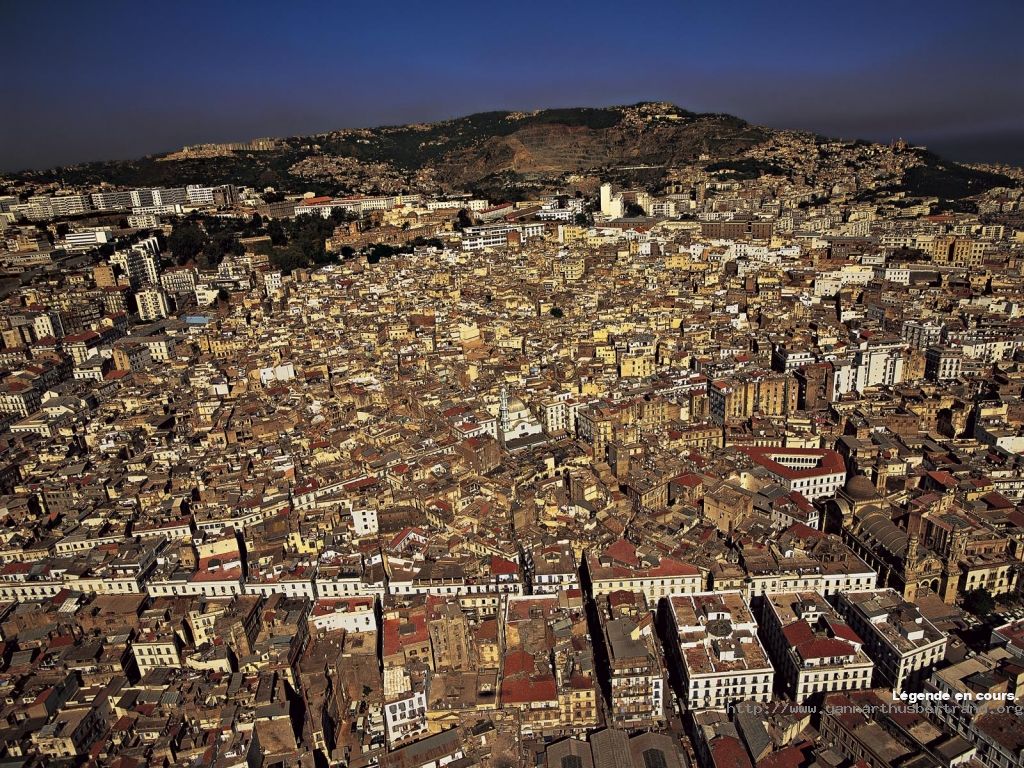
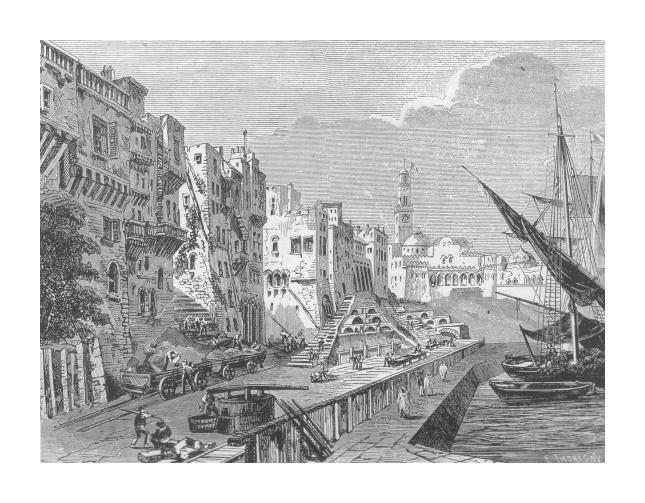
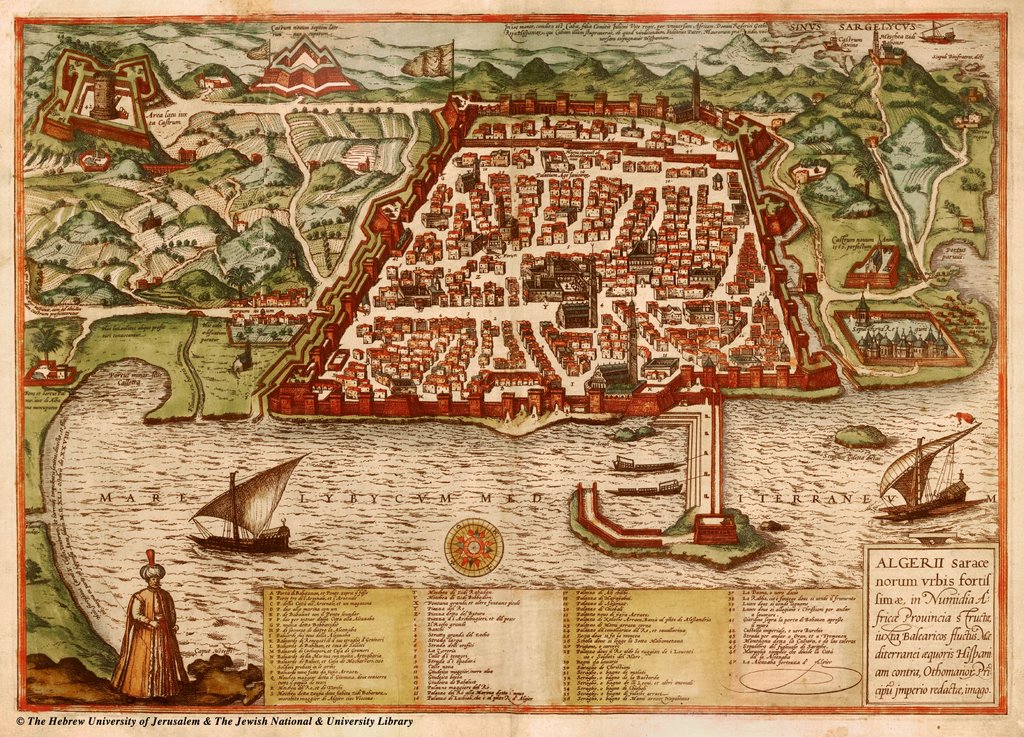
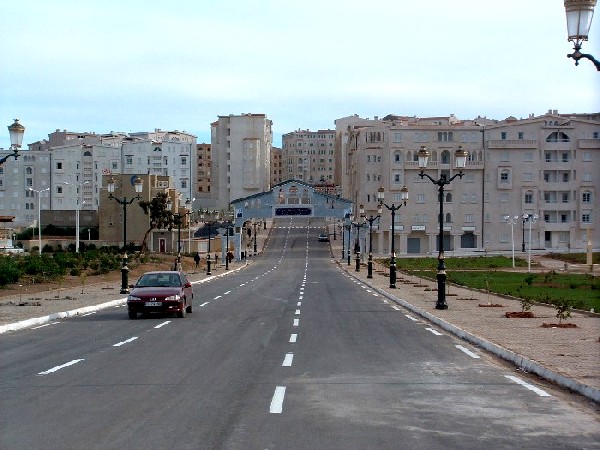
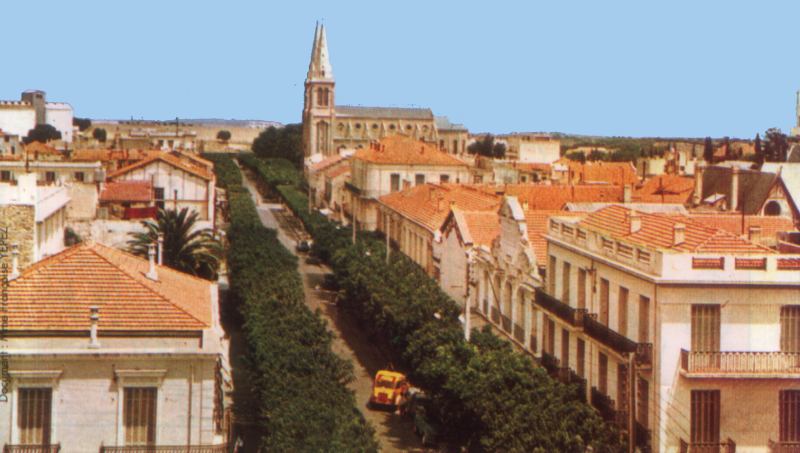
Algiers Old pictures


Ain Temouchent Pictures


Britain has at last escaped the illusion that salvation lies in mass science

Making the subject compulsory has been a failure - it is right that it should be a specialism for the interested few

Simon Jenkins
Friday October 13, 2006
The Guardian

In David Hare's National Theatre play Galileo the actor Simon Russell Beale rants and shouts for three hours at an exasperated pope about the importance of science. I do not normally cheer the papacy, but by the end of the play I was on its side. The pope had been happy to debate his ideas, but the man simply would not shut up.

Last week a new GCSE syllabus, titled Twenty First Century Science, came into use in a third of schools and was greeted with a similar rant from self-serving scientists. It moves away from test tubes and bunsen burners, towards an understanding of such topics as global warming, GM foods, vaccination, pollution, health and diet. It starts with the science of everyday life and delves into the technicalities only for pupils who are interested. It is "right way round" education.

The backwoods promptly howled that this was subjective, not objective science. It would "leave students poorly equipped to study science at A-level and university", apparently the be-all and end-all of education. Baroness Warnock protested that the new syllabus encouraged debate and "is thus more suitable for the pub than the classroom". Sir Richard Sykes, head of Imperial College London, played the old trump that it would "disadvantage state-school children" in getting into his university. "Britain needs more scientists," they all chanted. What they really mean is that their departments need more applicants or they will lose government grants.

At times my heart swells with pride at Britain's young. For nearly a quarter of a century they have had to confront this academic vested interest boring them to tears by drilling them, in effect, as press-ganged university lab assistants. They have shrugged, packed their satchels and walked away. Now at last - with the agreement of the Royal Society and the Association for Science Education no less - the new syllabus offers them science they might one day use.

The compulsory-science lobby began in the early 1980s by asserting its centrality in the national economy and declaring "a crisis" in maths and science teaching. There was no evidence for this, but the Thatcher government took it hook, line and sinker. (Margaret Thatcher had abandoned science for law.) Kenneth Baker's 1988 national curriculum, with its 300 pages of regulations and 400 inspectors, imposed science on schools "to meet the manpower needs of the economy". Virtually half the school day was to be devoted to maths, science and technology.

Baker's concession to this lobby relegated history and geography to optional status and ignored such "life skills" as economics, law, health, civics and the environment. It was academic log-rolling disguised as economic necessity, like the Roman Catholic church struggling to keep itself supplied with potential acolytes. At the time, Russia was producing more qualified scientists than the rest of Europe put together, and little good came of it. What Russia needed was economists, businessmen, lawyers and anyone prepared to question received doctrine. Now Britain too fell back on the economic chimera that salvation lay in mass science.

The curriculum has been a quarter century of total failure. Even after five years the number of pupils taking science GCSEs had fallen by 10%, and the number taking in physics, chemistry and biology were down by 16%, 14% and 10% respectively. Physics and maths A-levels fared no better, also down by 10%. University students were voting against science with their feet, and the insults heaped on them were extraordinary. Ministers and the media jeered at them for taking soft options, epitomised by business and media studies. Universities were penalised for teaching what students wanted, with a cut in arts grants per capita and an increase in science ones. Desperate academics opened their doors to lower-grade applicants for science courses, diluting quality and demoralising their departments. Nobody other than students noticed the shift in the jobs market towards law, accountancy, marketing, computing, management and media skills. Baker's curriculum was manpower planning gone haywire.

The science campaign left an entire generation of British pupils with an education they neither enjoyed nor could use. Each year the numbers doing non-compulsory science in schools declined. In the past decade alone university science departments have shrunk by between a third and a half. Only where market demand is clear - as in medicine - are departments oversubscribed and doctors in surplus. The most vocational university in Britain, the 25,000-strong University of Central England in Birmingham, now teaches no maths or science at all. Even old-fashioned universities are closing chemistry and physics departments (to howls from fundamentalists). The game is up.

The shrewdest essay on British education is still Lytton Strachey's debunking of the Victorian reformer Thomas Arnold, headmaster of Rugby. Strachey pointed out that Arnold's invention of the modern public school was a sales pitch to the new middle classes on the moral virtues of boarding. Children would be spiritually and socially secure in his school - and regularly thrashed. On the curriculum Arnold was reactionary. Having challenged the old regime institutionally, he told his tutors and ushers to teach traditional subjects.

As a result, said Strachey, "the monastic and literary conceptions of education, which had their roots in the middle ages, he adopted almost without hesitation ... devoted to the teaching of Greek and Latin grammar". While 19th-century Germany, France and Russia were racing into technology, Britain stuck with the classical "greats". Arnold's curriculum dominated British education until well after the second world war.

The 1988 national curriculum has been as stuck-in-the-mud as was Arnold's. Its archaic motto could be "What was good enough for me ... " Maths and science have merely replaced Latin and Greek as the dogma of the academic establishment, for whom schools are no more than tributary outposts. My own science O-level included trigonometry, advanced algebra and differential calculus, and related them to physics, engineering, statics and dynamics. I can not remember any of it, nor have I found the slightest use for it. I imagine more people use Latin than trigonometry. Maths teachers have joined classicists in that last refuge of educational sophistry, that the very uselessness of subject is good "mind training".

Today anyone who claimed that Britain "needs" more accountants, lawyers and marketing experts, because they are most in demand and highly paid, would be laughed at. To decry science teaching is like telling a church it does too much religion. Yet even the government is hypocritical. The people Gordon Brown and his colleagues recruit extravagantly each day are not scientists but management consultants, bankers, computer salesmen and business administrators. Young people are not dumb. They can read job advertisements and the skills required.

If I were a scientist or mathematician I would plead for my subject to be optional after primary school. I would crave it as a specialism for the highly motivated, like classics or medicine. I would want no army of sullen recruits telling the world that my subject was "boring". Science should claw back its 19th-century glamour. The new syllabus does that, accepting that mass science has shot its bolt. It returns this challenging subject to what, for the majority, should be its proper place, the land of curiosity and wonder.

simon.jenkins@guardian.co.uk

New mammal species discovered in Cyprus

Thursday October 12, 01:22 AM


LONDON (AFP) - A new species of mice has been found on the island of Cyprus by a French scientist at a British university, The Times reported.

The Cypriot mouse, named Mus cypriacus, has a larger head, ears, eyes and teeth than previously known examples of mice, and was confirmed as a new species by genetic tests.

It was discovered by Thomas Cucchi, a French scientist at the University of Durham, northern England, who came across Mus cypriacus while searching for mouse teeth from the Stone Age on the Mediterranean island.

"New mammal species are mainly discovered in hotspots of biodiversity like South East Asia and it was generally believed that every species of mammal in Europe had been identified," Cucchi was quoted by The Times as saying.

"This is why the discovery of a new species of mouse on Cyprus was so unexpected and exciting."

Cucchi, whose findings are to appear in the journal Zootaxa, says the Cypriot mouse appears to predates the arrival of humans on the island.

Wednesday, October 11, 2006

Algeria 1-0 Gambia

Algeria 1-0 Gambia

Karim Ziani's second-half penalty earned Algeria a first competitive win since March 2005 after beating Gambia in Group Eight of the Nations Cup qualifiers.

The midfielder converted the kick for the home side after Rafik Saifi was brought down in the box with only 15 minutes remaining.

The Desert Foxes dominated the game but found the Gambia keeper in good form.

Algeria's last win in a competitive match was when they beat Rwanda 1-0 in the Nations Cup qualifiers in Oran last year.

It was the first game in charge for Gambia's young German coach Antoine Hey.

Algeria now occupy the top spot with four points following Cape Verde's 1-0 win over Guinea in the other group match on Saturday.

The home side won the game thanks to a 52nd minute strike by Lito.

Cape Verde travel to face Algeria in their match while Gambian take on Guinea.

Whats New!

Google is buying video-sharing website YouTube for $1.65bn (£883m) in shares after a weekend of speculation that a deal was in the offing.

The two companies will continue to operate independently, Google said as it announced the news on Monday.

YouTube, launched in February 2005, has grown quickly into one of the most popular websites on the internet.

It has 100 million videos viewed every day and an estimated 72 million individual visitors each month.

'Natural partners'

"The YouTube team has built an exciting and powerful media platform that complements Google's mission to organize the world's information and make it universally accessible and useful," Google chief executive Eric Schmidt said in a statement.

He said the two companies were "natural partners" to offer a media entertainment service to users, content owners and advertisers.

Mr Schmidt also told investors that YouTube will be "one of many investments" Google plans to make in the video field.

However, the company will keep operating its own Google Video as a separate operation.

YouTube will retain its brand, and its 67 staff, including co-founders Chad Hurley and Steve Chen, will keep their jobs.

"Our community has played a vital role in changing the way that people consume media, creating a new clip culture," said Mr Hurley.

"By joining forces with Google, we can benefit from its global reach and technology leadership to deliver a more comprehensive entertainment experience for our users and to create new opportunities for our partners."

According to Comscore World Metrix, YouTube's audience has soared from 2.8 million unique users one year ago to 72 million users in August 2006.

Music tie-ups

The announcement came after a day of distribution deals drawn up by the pair.

Universal Music Group has signed a distribution deal with YouTube, which will protect the rights of the music firm's artists.

YouTube also says it has signed a deal with CBS, which will offer short-form video programming, including news, sport and entertainment on YouTube.

Google has also signed distribution deals of its own, with Sony BMG and Warner Music to offer music videos.

The Google deals should enable internet users in the US to view music videos, artist interviews, and other footage from the two firms on Google video for free from this month.

The content is sponsored through a Google advertising-supported revenue-sharing agreement.

Google also said that in addition to the advertising-supported video content, music videos from Warner would be available for purchase as downloads at $1.99 each.

As part of YouTube's deal with CBS, the companies will share revenue from advertising sponsorship of CBS Videos.